
Maxi Skirts: The Most Underrated Bottom in Women's Fashion
The quick take: Maxi skirts deserve far more credit than they get. Comfortable without looking overly casual, dramatic without being difficult to wear, and adaptable enough for summer outfits, office wear, evenings and transitional dressing, the maxi skirt is one of those rare pieces that can earn its place in a capsule wardrobe. The key is choosing a length and silhouette that work with your proportions, then balancing the volume of the skirt with the rest of the outfit. From fitted and flowing shapes to pleated, A-line and ankle-skimming designs, women's maxi skirts offer considerably more styling range than their reputation suggests.
In short: if trousers feel predictable and a mini skirt feels too specific for the occasion, a maxi skirt often occupies the perfect middle ground. It gives an outfit movement, length and presence while remaining remarkably easy to style.
The Maxi Skirt Has Been Hiding in Plain Sight
Some wardrobe staples announce themselves loudly.
Jeans have practically built an empire around being indispensable. Tailored trousers are the reliable answer to every "what do I wear to work?" dilemma. Mini skirts regularly return to the fashion conversation with a new hemline, fabric or nostalgic reference attached.
And then there is the maxi skirt.
It simply gets on with the job.
Long, versatile and capable of changing character depending on what surrounds it, a maxi can move from a white T-shirt and trainers in the afternoon to a fitted top and heels after dark. It can be minimalist, romantic, bohemian, tailored, sporty or quietly dramatic.
That's precisely why the maxi skirt may be one of the most underrated pieces in contemporary womenswear.
Browse a broader selection of women's bottoms and it becomes obvious just how many silhouettes compete for that valuable space in a wardrobe. Yet long skirts have an advantage many alternatives struggle to match: they can provide coverage and comfort without sacrificing the shape or intention of an outfit.
A good maxi doesn't merely fill the space where trousers would otherwise go. It changes the proportions of the entire look.
What Actually Makes a Skirt a Maxi?
The definition sounds simple until you start looking at hemlines.
A maxi skirt is essentially a long skirt designed to finish around the ankle or lower. Some versions are ankle-grazing, while others extend almost to the floor. That separates them from midi skirts, which generally finish somewhere between the knee and lower calf.
In practice, there is plenty of variation:
- Ankle-length skirts expose more of the shoe and can feel particularly easy for everyday wear.
- Full-length skirts create a longer, more dramatic vertical line.
- Floor-length skirts offer maximum impact and often lend themselves to occasion wear.
- High-waisted maxi skirts visually raise the waist and can emphasise a longline silhouette.
- Low-slung maxi skirts shift the proportions downward for a more relaxed, Y2K-inspired effect.
- Fitted or column skirts follow the body more closely and create a streamlined shape.
- Voluminous and flared maxi skirts introduce movement and make the skirt itself the focal point.
That distinction matters because maxi skirt length is only part of the equation. Fabric, waist placement, volume and construction can make two skirts with almost identical hemlines look completely different.
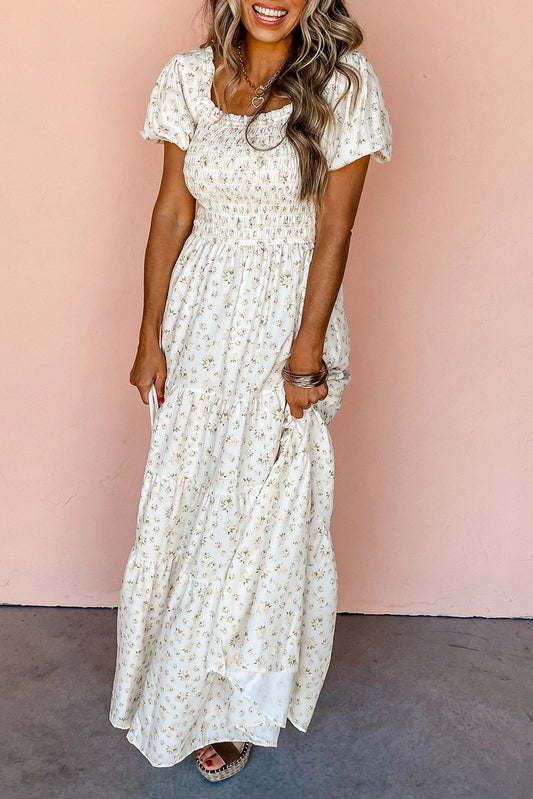
A floaty maxi skirt in lightweight fabric creates movement. A straight maxi skirt creates a clean vertical line. A pleated maxi skirt adds texture. A fitted maxi skirt can look sleek and minimalist. An A-line maxi skirt gently widens towards the hem, giving it an entirely different sense of proportion.
So when somebody says, "Maxi skirts don't suit me," there's a good chance they simply haven't met the right maxi yet.
Why Are Maxi Skirts So Underrated?
Part of the problem is perception.
The maxi has collected plenty of fashion associations over the years. Say "long skirt" and one person might imagine a breezy boho maxi skirt worn on holiday, while another pictures a formal floor-length skirt. Someone else may immediately think of the denim maxi skirt revival or the low-rise silhouettes associated with Y2K fashion.
Those references aren't wrong. They're just incomplete.
The broader world of skirts and petticoats shows why treating the maxi as one narrowly defined aesthetic misses the point. Length is a framework rather than a personality. What you do within that framework determines the result.
Consider how dramatically the mood changes between:
- a black maxi skirt with a fitted tank top and pointed-toe shoes;
- a cotton maxi skirt with an oversized shirt and flat sandals;
- a satin maxi skirt with a bodysuit and heels;
- a denim maxi skirt with a white T-shirt and trainers;
- a pleated maxi skirt with knitwear and knee-high boots.
All five outfits revolve around approximately the same hemline. None tells quite the same story.
That adaptability is the maxi skirt's secret weapon.
It Doesn't Demand One Particular Aesthetic
A great wardrobe staple should work around your personal style rather than forcing you to build an outfit around it every time.
Maxi skirts can do that unusually well.
A black maxi skirt can become part of a minimalist wardrobe. A floral maxi skirt can lean feminine or romantic. A cargo maxi skirt immediately feels more utilitarian. A slip skirt introduces softness and movement, while a pencil maxi skirt or column skirt can create a sharper, more architectural silhouette.
Even fabric changes the conversation.
A linen maxi skirt belongs naturally in summer fashion because linen and other breathable fabrics can keep a full-length silhouette feeling light. A cotton maxi skirt can be similarly relaxed. Satin and silk-inspired finishes lend themselves to day-to-night dressing, while knitted or wool maxi skirts make the same basic length relevant to winter styling.
In other words, the maxi isn't one trend.
It's a platform for dozens of them.
The Return of the Long Hemline
Fashion has an entertaining habit of declaring something "back" when it never entirely went away.
Long skirts are a perfect example.
Hemlines rise, fall and hover somewhere in between as fashion trends cycle through different decades. Mini silhouettes can dominate one season, only for ankle-skimming shapes to regain attention the next. The resurgence of '90s minimalism and Y2K fashion has made this particularly visible, bringing everything from streamlined column skirts to denim and low-slung maxi silhouettes back into focus.
But reducing the current maxi skirt trend to nostalgia would undersell it.
Today's appeal has as much to do with practicality as revivalism.
Women increasingly expect clothes to move between different parts of life. An outfit might need to work for a commute, lunch, an afternoon appointment and dinner without a complete change in between. That favours pieces with flexibility.
The maxi skirt happens to be exceptionally good at it.
The real appeal of a maxi isn't that it follows a particular decade. It's that the same longline silhouette can be reinvented every time the top, shoe, fabric or proportion changes.
That gives the maxi something trend-led pieces don't always possess: staying power.
The Case for Making a Maxi Skirt a Wardrobe Essential
Think about the clothes you actually wear repeatedly.
Usually, they're not the most complicated pieces in the wardrobe. They're the ones that make getting dressed easier.
That is where women's maxi skirts begin to make a convincing case for themselves.
A well-chosen maxi can offer:
- Coverage without heaviness when the fabric is appropriate for the season.
- Comfort without looking unfinished, particularly with fluid or elasticated-waist designs.
- Visual impact without elaborate styling, because the long silhouette already gives an outfit presence.
- Seasonal flexibility, moving from sandals and lightweight tops to boots, cardigans and knitwear.
- Day-to-night potential through a simple change of shoes, top or accessories.
- A useful alternative to trousers and jeans when you want comfort but a completely different silhouette.
- Plenty of room for personal style, from classic and minimalist to romantic, bohemian and trend-led.
This is why the maxi deserves consideration when building a capsule wardrobe.
Not every maxi skirt will be a capsule piece, of course. A sheer maxi skirt or an elaborate printed maxi skirt may have a much more specific purpose. But a versatile skirt in a neutral shade or wearable fabric can become the foundation for an impressive number of outfits.
A black maxi skirt is the obvious example, but it isn't the only one. Cream, brown, navy and other easy-to-coordinate shades can perform much the same role. Denim has its own versatility, while a simple satin maxi skirt can bridge casual outfits and occasion wear surprisingly well.
The question stops being "Where would I wear a maxi skirt?"
It becomes "How many ways can I wear this one?"
Maxi Skirt Silhouettes Matter More Than You Think
One reason people sometimes dismiss long skirts is that they focus on length while ignoring shape.
Yet silhouette determines almost everything.
A high-waisted A-line maxi skirt, for example, creates a very different outline from a low-rise fitted maxi skirt. One emphasises the waist before flowing outward; the other creates a longer, straighter line through the body.
Likewise, a voluminous maxi skirt can look beautifully balanced with a fitted tank top, bodysuit or cropped top because the contrast gives the outfit definition. Put the same skirt beneath a very long oversized top and the proportions become deliberately looser and more dramatic.
Neither approach is automatically right or wrong. The important thing is understanding what the proportions are doing.
A Quick Guide to the Main Maxi Shapes
| Maxi silhouette | Overall effect | Works particularly well with |
|---|---|---|
| A-line maxi skirt | Defined waist with gentle volume | Fitted T-shirts, blouses, knitwear |
| Column skirt | Long, streamlined silhouette | Tank tops, shirts, longline vests |
| Pencil maxi skirt | Close-fitting and polished | Bodysuits, fitted knits, heels |
| Pleated maxi skirt | Movement and texture | Simple tops, cardigans, boots |
| Slip skirt | Fluid, soft and minimal | T-shirts, camisoles, oversized knitwear |
| Flared maxi skirt | Movement with a wider hem | Fitted tops, cropped jackets |
| Denim maxi skirt | Structured and casual | T-shirts, shirts, trainers, boots |
| Wrap maxi skirt | Adjustable, softly structured shape | Tanks, blouses, sandals |
This is where good maxi skirt styling really begins: not with rules about who can wear one, but with understanding proportion.
And once that clicks, the possibilities get much more interesting.
How to Style a Maxi Skirt Without Overthinking It
For something so easy to wear, maxi skirts attract a surprising number of styling rules.
Don't wear them if you're petite. Don't combine volume with volume. Always define the waist. Never let the hem touch your shoes. Wear heels. Avoid heels. Tuck your top in.
It gets exhausting.
Most successful maxi skirt outfits aren't built around rigid rules at all. They're built around proportion, texture and contrast. Once those three things are working together, there is plenty of room to experiment.
The easiest starting point is to decide what you want the skirt to do.
If your maxi is voluminous, pleated or heavily printed, you may want it to command the outfit. A fitted T-shirt, tank top or simple bodysuit gives it space to do exactly that. If you're wearing a straight maxi skirt or understated column skirt, you have more freedom to introduce volume above the waist with an oversized shirt, substantial knit or structured jacket.
Think of it as a conversation between the top and bottom rather than a formula.
Maxi skirt styling works best when something creates contrast: fitted with flowing, polished with casual, soft with structured, or minimal with expressive.
Four Easy Outfit Formulas
When you don't want to think too hard about what to wear, these combinations are reliable starting points:
-
Maxi skirt + fitted T-shirt + trainers
Easy everyday wear with enough structure to keep the outfit intentional. -
Flowing maxi skirt + tank top + flat sandals
A natural combination for warm weather, holidays and relaxed summer outfits. -
Straight maxi skirt + oversized shirt + mules
A slightly sharper formula that moves comfortably into smart-casual outfits or office wear. -
Satin maxi skirt + knitwear + boots
The contrast between a fluid skirt and heavier texture makes this particularly effective for transitional dressing.
None requires complicated layering. None depends on owning a wardrobe full of statement pieces.
That's rather the point.
Fabric Can Completely Change a Maxi Skirt
Length may determine whether a skirt falls into the maxi category, but fabric determines much of its personality.
Put the same basic silhouette into denim and silk-inspired satin and you'd barely recognise them as relatives.
That's worth considering before buying according to trend alone. Ask yourself when you actually want to wear the skirt and how you want it to move.
Denim Maxi Skirts: The Casual Heavyweight
The denim maxi skirt has a certain confidence to it.
Denim gives the long silhouette structure, making it a useful alternative when jeans feel too obvious. A straight or side-slit maxi in denim can work with a white T-shirt and trainers for everyday wear, then shift into autumn with knitwear and knee-high boots.
Because denim carries visual weight, the rest of the outfit doesn't need to work particularly hard.
A fitted tank top can be enough.
So can an Oxford shirt.
That simplicity helps explain why denim versions have become such a recognisable part of the modern maxi skirt trend. They borrow the familiarity of jeans while changing the proportions completely.
Satin and Silk: Not Just for Evenings
A satin maxi skirt has a different trick up its sleeve.
Its fluidity can make it look inherently dressier, but styling it exclusively for evening wastes much of its potential. Add a plain T-shirt, cardigan, trainers or flat sandals and that polished surface suddenly feels far more relaxed.
The same principle applies to a silk maxi skirt or bias-cut maxi skirt.
Instead of saving fluid fabrics exclusively for occasion wear, contrast them with everyday pieces:
- Pair a satin finish with chunky knitwear.
- Wear a slip skirt with a simple crew-neck jumper.
- Add a casual button-down shirt rather than a formal blouse.
- Choose ballet flats or trainers instead of automatically reaching for heels.
That high-low contrast can make a supposedly "dressy" skirt considerably more useful.
Cotton and Linen: Made for Warmer Days
Full-length clothing in summer can sound counterintuitive.
In reality, fabric matters far more than the amount of leg on display.
A cotton maxi skirt in a lightweight construction can feel airy and relaxed, while a linen maxi skirt benefits from the breathable character associated with natural fibres. Both work particularly well when the silhouette allows movement rather than clinging closely to the body.
For summer fashion, try combinations such as:
white maxi skirt + fitted tank top + flat sandals
or
linen maxi skirt + oversized shirt + simple shoulder bag
The result is covered without necessarily feeling heavy.
A floaty maxi skirt can also be an excellent holiday piece because it shifts easily between swimwear, casual daytime dressing and evening outfits depending on what you add above it.
Wool and Knitted Maxi Skirts: The Cold-Weather Argument
Maxi skirts shouldn't disappear when summer ends.
In fact, their additional length can make them particularly satisfying for autumn outfits and winter styling.
A wool maxi skirt introduces warmth and structure. A knitted maxi skirt tends to feel softer and more relaxed. Both can be layered with tights where appropriate, knee-high boots, crew-neck jumpers, cardigans and coats.
The silhouette remains long and elegant; the textures become heavier.
This is one of the clearest arguments for thinking of the maxi as a year-round wardrobe staple rather than a seasonal purchase.
What About the White Maxi Skirt?
Few pieces demonstrate the versatility of the long-skirt silhouette quite like a white maxi skirt.
It can be crisp or romantic. Minimalist or bohemian. Polished or deliberately undone.
A cotton version with gentle volume works beautifully with a fitted tank and sandals. Add a button-down shirt and the outfit becomes more structured. Pair a white ankle-length skirt with a simple black top and suddenly the effect is graphic and minimal.
It also offers an easy route into tonal dressing.
Cream, ivory, oatmeal and soft neutral layers can sit alongside white without requiring an exact colour match. Different textures actually make the combination more interesting.
The practical consideration, naturally, is opacity. With lightweight white fabrics, lining and construction matter. A beautiful silhouette isn't much use if you spend the entire day wondering whether sunlight has turned your outfit into an accidental experiment in transparency.
The Black Maxi Skirt Might Be the Ultimate Wardrobe Workhorse
If white feels fresh, black maxi skirts are the masters of disappearing into almost any wardrobe.
And that's a compliment.
A useful black skirt doesn't need to dominate every outfit. Its strength lies in giving other pieces somewhere to go.
Wear one with:
- a white T-shirt and trainers for casual dressing;
- a fitted black top for a monochrome outfit;
- a blouse and pointed-toe shoes for office wear;
- an oversized knit and boots when temperatures fall;
- a bandeau or halter-neck top for evening;
- a statement shirt when you want the top half to take centre stage.
The colour is only the beginning, though.
A black pleated maxi skirt feels completely different from a fitted jersey maxi. A black column skirt can be stark and minimalist, whereas a sheer maxi skirt layered appropriately can feel more experimental.
Again, silhouette beats category.
The Maxi Skirt's Secret Weapon Is Seasonlessness
There are clothes that belong to a season.
Heavy coats have winter. Linen shorts have summer. Certain pieces are packed away almost automatically when the weather changes.
Maxi skirts resist those boundaries.
The skirt itself can remain while everything around it changes.
Spring
Spring is where transitional dressing becomes useful. Combine a long skirt with lightweight knitwear, a cardigan or an oversized shirt. Trainers, ballet flats and boots can all work depending on the weather.
This is also an ideal moment for pleats, cotton and softer tailoring.
Summer
Switch to breathable fabrics, tank tops, bandeau tops, sandals and lighter accessories.
A cotton, linen or flowing maxi skirt gives summer outfits movement while offering more coverage than shorter alternatives. A floral maxi skirt or printed maxi can introduce pattern without requiring much additional styling.
Autumn
This may be the maxi skirt's strongest season.
Boots return. Knitwear becomes useful again. Layering suddenly makes sense.
A denim, leather-look, knitted or structured maxi can anchor an autumn wardrobe while the top half changes between shirts, cardigans, jumpers and jackets.
Winter
Winter calls for texture and strategic layering.
A wool maxi skirt, heavier knitted style or substantial straight skirt works with boots and warm knitwear without losing the longline silhouette. Depending on the skirt and footwear, tights can add another layer without changing the overall appearance of the outfit.
The lesson is simple: instead of asking whether maxi skirts are "in season," ask whether the fabric and styling suit the season.
That's a much more useful question.
How to Wear Maxi Skirts for Work
The maxi skirt's relaxed reputation can obscure how polished it can look.
For office wear, the trick is usually to choose a cleaner silhouette.
A straight maxi skirt, tailored maxi skirt, column shape, subtle A-line or pencil maxi skirt creates a more structured foundation than an extremely floaty bohemian design. Pair it with a button-down shirt, fitted knit, blouse or longline vest and the result can feel purposeful without defaulting to trousers.
Footwear changes the level of formality quickly.
Ballet flats create a softer finish. Mules can sharpen the outfit. Pointed-toe shoes visually continue the line of the skirt, while boots make sense in cooler months.
For a straightforward smart-casual formula, try:
Tailored maxi skirt + fitted knit + belt + pointed-toe shoes + structured shoulder bag
It's uncomplicated, but every element has a job.
And because the skirt provides such a strong vertical line, you rarely need excessive accessories to make the outfit feel complete.
Maxi Skirts for Petite Women: Forget the Old Rule
One of fashion's more persistent myths is that petite women should avoid long skirts because they'll look "swamped."
That's far too simplistic.
A petite maxi skirt can work beautifully. What matters is the relationship between maxi skirt length, waist placement, footwear and the volume of the rest of the outfit.
For petite proportions, several approaches can be particularly useful:
- Look for a hem that genuinely suits your height rather than accepting excess fabric.
- Consider an ankle-grazing length if you want more footwear visible.
- A high-waisted maxi skirt can visually extend the lower half of the body.
- Cleaner vertical lines can create an elongated silhouette.
- If the skirt has significant volume, a more fitted top can provide definition.
- Tonal dressing can create an uninterrupted visual line.
- Don't assume heels are compulsory; correctly proportioned flat shoes can work perfectly well.
Most importantly, petite does not mean one body shape.
A rule that supposedly applies to every woman below a particular height isn't especially useful because height is only one component of proportion.
The better goal is balance.
And What About Tall Women?
Tall women encounter almost the opposite problem: a supposed maxi skirt that turns out to be an awkward midi.
Here, checking the actual garment length becomes particularly important.
Maxi skirts for tall women need enough length to create the intended effect, especially if you're looking for a floor-skimming or full-length silhouette. An ankle-length skirt can still work beautifully, of course, but it should look deliberately ankle-length rather than accidentally short.
Tall frames can also carry dramatic volume particularly well, making tiered maxi skirts, flared silhouettes and full skirts interesting options when the goal is impact.
But there is no obligation to maximise volume simply because you have height.
A long, fitted column silhouette can be equally striking.
Stop Dressing for "Flattering" and Start Dressing for Proportion
The word flattering appears everywhere in fashion.
Sometimes it's useful. Often, it's code for making everybody dress towards the same visual objective.
Maxi skirts offer a better way to think about getting dressed.
Rather than asking, "Does this make me look thinner/taller/smaller?", consider:
- Where does the waistband sit?
- Where does the hem finish?
- How much movement does the fabric have?
- Where is the volume concentrated?
- Do I want the skirt or the top to dominate?
- How does the shoe interact with the hem?
- Do the proportions feel intentional?
Those questions allow room for actual personal style.
You might want oversized proportions. You might prefer a low-slung skirt rather than defining your waist. You might enjoy a voluminous maxi with an oversized shirt precisely because it ignores the conventional advice to "balance" volume with something fitted.
Fashion becomes considerably more interesting when styling advice becomes a tool rather than a commandment.
The Shoes Can Change Everything
If there is one element capable of completely changing a maxi skirt outfit without changing the skirt itself, it's footwear.
Take a simple straight maxi.
With trainers, it's casual.
With ballet flats, it becomes softer and more polished.
With knee-high boots disappearing beneath the hem, it becomes distinctly autumnal.
With pointed-toe shoes, the silhouette sharpens.
With flat sandals, it relaxes into summer.
With heels, it can move towards evening or occasion wear.
This is why the relationship between maxi skirt hemline and footwear deserves attention. You don't necessarily need much shoe on display, but the small amount you can see often has an outsized effect on the finished outfit.
And that brings us to one of the maxi skirt's greatest strengths: it doesn't need an entirely new wardrobe built around it.
Often, you already own everything required to make it work.
The Maxi Skirt Can Do What Jeans Do — Just Differently
Jeans have earned their status as an everyday default. They're familiar, durable and easy to pair with almost anything.
But familiarity can become repetition.
When the fifth variation of "jeans and a nice top" starts to feel suspiciously similar to the first four, a maxi skirt offers another route without making getting dressed more complicated.
The same wardrobe pieces still work.
That white T-shirt? Keep it.
The fitted tank top? Absolutely.
Your favourite oversized shirt, cardigan, jumper, trainers, boots and shoulder bag? None of them suddenly becomes redundant because trousers have been replaced by a skirt.
The difference is the silhouette.
A maxi introduces movement where jeans create structure. A flared maxi skirt changes the proportions around the legs. A straight skirt keeps the clean vertical quality of trousers but feels distinctly different. A side-slit maxi skirt can introduce movement and flashes of footwear without sacrificing the overall longline effect.
This is what makes a versatile skirt genuinely useful: it works with the wardrobe you already have rather than demanding a new one.
Don't Forget the Less Obvious Maxi Skirts
Denim, satin, cotton and pleated styles may receive much of the attention, but the maxi category becomes more interesting once you venture beyond the obvious choices.
The Cargo Maxi Skirt
A cargo maxi skirt brings pockets, structure and utilitarian detailing into a silhouette more commonly associated with fluidity.
That contrast is exactly what makes it interesting.
Rather than styling one with equally complicated pieces, consider keeping the rest relatively straightforward: a fitted T-shirt, tank, simple knit or bodysuit allows the cargo details to remain visible.
Add trainers for street style, or change the mood with boots.
The Sheer Maxi Skirt
The sheer maxi skirt sits at the more directional end of the spectrum.
It isn't necessarily an everyday wardrobe essential, but it demonstrates just how far the long-skirt silhouette can stretch. Depending on its construction and lining, sheer fabric can introduce texture and layering while retaining the dramatic vertical line of a full-length skirt.
This is a style where thoughtful layering matters more than following a fixed outfit formula.
The Tiered Maxi Skirt
A tiered maxi skirt is all about movement.
Its horizontal seams and increasing volume create a completely different visual rhythm from the uninterrupted line of a pencil or column skirt. Lightweight versions naturally suit summer wardrobes and bohemian styling, while darker colours and heavier fabrics can take the same construction into transitional dressing.
Because the skirt already provides plenty of visual interest, a relatively simple top often gives the outfit enough balance.
The Wrap Maxi Skirt
A wrap maxi skirt has an ease that more rigid constructions sometimes lack.
The overlapping front can introduce movement, asymmetry and an adjustable quality, depending on the design. It can work particularly well with sandals and lightweight tops in warm weather, but there's no reason to restrict it to holiday outfits.
Add boots and knitwear and the same basic silhouette becomes far more autumnal.
The Jersey Maxi Skirt
Then there is jersey: perhaps the strongest evidence for the maxi skirt's ability to combine comfort and style.
A jersey maxi skirt can feel soft and uncomplicated while still producing a deliberate longline silhouette. The danger is assuming that comfortable automatically means ultra-casual.
It doesn't.
A fitted jersey column skirt with an oversized shirt and polished flats can look remarkably put-together. The fabric provides comfort; the proportions provide the style.
Printed or Plain? Both Have a Place
Neutral maxi skirts are easy to defend because versatility comes naturally to them.
Print requires a little more thought, but that isn't necessarily a disadvantage.
A printed maxi skirt can effectively do most of the outfit-building for you. Instead of adding multiple layers, accessories or contrasting textures, you can allow the pattern to become the focal point.
The simplest strategy is to pull one colour from the print and repeat it on top.
A floral maxi skirt containing cream, for instance, can be paired with a cream tank or blouse. A darker floral print can be grounded with black knitwear. You can also ignore colour matching entirely and use a simple neutral top.
For particularly bold patterns, fewer competing elements usually allow the skirt to have more impact.
But "usually" is important.
If maximalism is your personal style, print-on-print can be intentional too.
The maxi skirt is versatile enough to accommodate both approaches.
Building a Capsule Wardrobe Around a Maxi Skirt
A capsule wardrobe doesn't need to mean owning twelve beige garments and arranging them according to increasingly specific shades of oatmeal.
The useful idea behind capsule dressing is much simpler: own pieces that cooperate.
A maxi skirt can be excellent at that.
Imagine starting with one relatively understated skirt. Depending on your wardrobe, that might be a black maxi skirt, a straight denim style, a neutral A-line design or a simple satin skirt.
Now give it:
- 2 simple T-shirts;
- 1 fitted tank top;
- 1 button-down shirt;
- 1 piece of knitwear;
- 1 cardigan or jacket;
- trainers;
- flat shoes or sandals;
- boots;
- a practical everyday bag.
You haven't created one outfit.
You've created a small network of them.
The T-shirt and trainers work for everyday wear. The shirt and flats sharpen things up. Knitwear and boots take the skirt into colder weather. A fitted top and more polished footwear can move the same piece towards evening.
That's the difference between merely owning clothes and building a functional wardrobe.
A wardrobe essential isn't necessarily the item you notice first. It's often the piece that quietly makes everything else easier to wear.
By that definition, the maxi skirt deserves considerably more attention.
The Case for a Maxi in a Minimalist Wardrobe
Minimalist style is particularly well suited to long skirts because the silhouette can provide interest without requiring decoration.
A simple column skirt demonstrates this perfectly.
There may be no print, dramatic embellishment or complicated construction. Instead, the impact comes from line, length and proportion.
Combine a neutral column maxi with a fitted T-shirt and flat shoes and the outfit can feel complete with very little else. A monochrome outfit pushes the effect further, allowing subtle differences in fabric and texture to become more noticeable.
This approach has obvious connections to '90s minimalism, but it doesn't have to feel retro.
Clean silhouettes are difficult to confine to a particular decade.
For a minimalist maxi skirt outfit, focus on:
- a restrained colour palette;
- clean lines;
- thoughtful proportions;
- fabrics with interesting texture or drape;
- simple footwear;
- minimal but deliberate accessories.
The absence of excess makes fit and proportion more visible, which is precisely why choosing the right maxi skirt silhouette matters.
But the Maxi Is Equally at Home in Bohemian Style
At the opposite end of the spectrum sits the boho maxi skirt.
Here, movement is often the point.
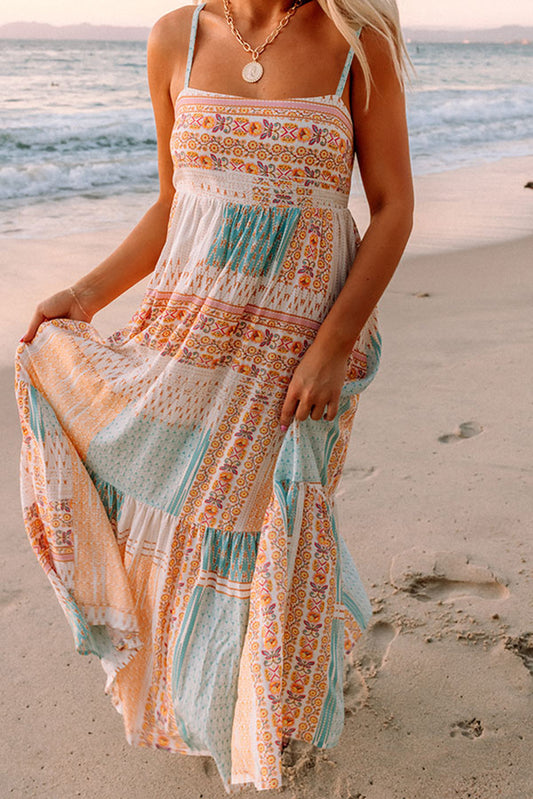
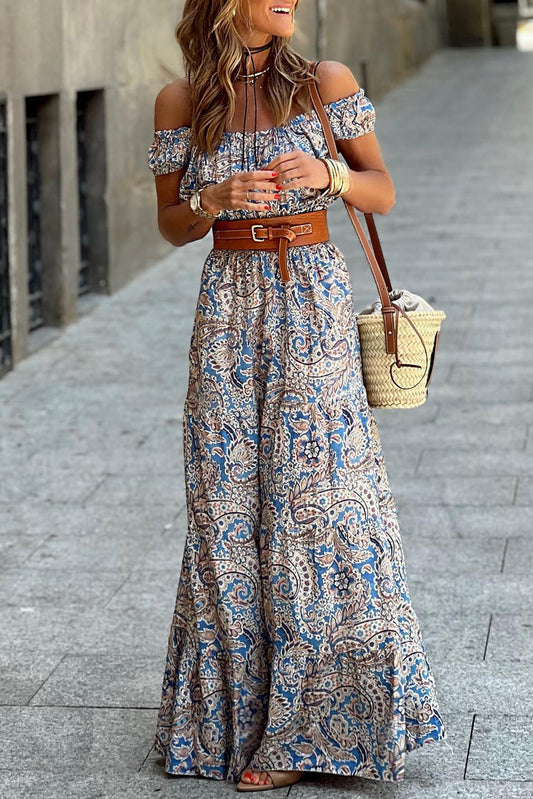
Tiered construction, floral prints, flowing fabrics and fuller shapes can create the relaxed quality associated with bohemian dressing. A floaty maxi skirt with sandals and a lightweight top is an obvious summer combination, but boho styling doesn't need to become costume-like.
Sometimes one expressive element is enough.
Try a printed skirt with an otherwise simple outfit. Or combine a flowing skirt with a crisp shirt, allowing relaxed and structured elements to play against each other.
A bohemian maxi skirt doesn't require every accessory in the wardrobe to suddenly acquire fringe.
Restraint can make the statement piece stronger.
Maxi Skirts and Modest Fashion
Another reason long skirts deserve a broader place in the fashion conversation is their natural compatibility with modest fashion.
A full-length skirt provides coverage while leaving enormous scope for silhouette, colour, texture and layering. Depending on personal preference, it can be paired with a tucked blouse, longer shirt, cardigan, knitwear or structured outer layer.
Importantly, modest doesn't mean shapeless.
An A-line maxi can provide movement while maintaining definition at the waist. A pleated style introduces texture. A straight maxi creates a cleaner line. A voluminous design can deliberately embrace dramatic proportions.
Coverage and style aren't competing ideas.
The maxi skirt demonstrates that particularly well.
How to Take a Maxi Skirt From Day to Night
The phrase day-to-night dressing can make it sound as though everyone spends their evenings sprinting directly from an office into a cocktail bar.
Real life is generally less cinematic.
Still, there are days when changing an entire outfit is inconvenient, and the maxi skirt is unusually adaptable in those situations.
Start with a versatile base:
simple maxi skirt + fitted top + understated shoes + everyday bag
To change the mood later, you might:
- swap trainers or flats for heels or pointed-toe shoes;
- replace a practical tote with a smaller shoulder bag;
- remove an oversized daytime layer;
- add jewellery or a belt;
- exchange a T-shirt for a more polished top if you have the opportunity.
With a satin maxi skirt or sleek black maxi, the transition can be particularly subtle.
The important part is that the skirt doesn't need rescuing.
It was already appropriate. You're simply changing the context around it.
Occasion Wear Doesn't Have to Mean a Dress
Invitations often trigger an automatic response:
I need a dress.
Sometimes you do.
Sometimes you don't.
A formal maxi skirt can be a useful alternative for dinners, celebrations and other occasions where you want more impact than everyday clothing provides. Pairing a skirt and top separately also gives you the opportunity to rewear both pieces in completely different combinations later.
A flowing full-length skirt with a fitted top can produce much of the drama associated with a dress. A satin or pleated maxi can feel polished with heels and a blouse. A tailored maxi skirt can lean more contemporary when paired with a sharply cut top.
This is particularly useful if you dislike buying clothes that have one highly specific purpose.
One skirt can attend the occasion and still turn up for ordinary life afterwards.
Maxi Skirt Mistakes That Aren't Really Rules
There are, however, a few common styling problems worth recognising.
Not because fashion requires permission, but because understanding why an outfit feels slightly off makes it easier to change deliberately.
1. Ignoring the Actual Hem Length
A maxi skirt that's too long can affect more than appearance.
If you're repeatedly stepping on the hem or holding the skirt up to walk, the problem isn't your body; the garment simply needs a more appropriate length.
Alterations can make an enormous difference.
2. Forgetting About Fabric Weight
A heavy fabric with lots of volume behaves differently from lightweight cotton or chiffon.
If an outfit feels visually heavy, consider changing either the top, footwear or layering rather than blaming the skirt length itself.
3. Assuming Every Maxi Needs Heels
It doesn't.
Trainers, sandals, ballet flats, mules and boots can all work with long skirts. The right choice depends on the intended mood and where the hem falls.
4. Automatically Tucking Every Top In
Tucking can define the waist, but it isn't mandatory.
An untucked oversized shirt over a straight maxi can create excellent relaxed proportions. A cropped top provides definition without tucking. A longer knit can intentionally create a continuous silhouette.
Experiment before defaulting to a rule.
5. Saving Your Best Maxi for "Something"
Clothes become considerably better value when they're actually worn.
If a skirt works with a T-shirt and flats, there is little reason to wait for dinner reservations before taking it out of the wardrobe.
How to Choose a Maxi Skirt You'll Actually Wear
The most useful maxi isn't necessarily the most fashionable one.
It's the one that fits into your life.
Before deciding, consider five things:
1. Length
Do you prefer an ankle-skimming skirt that reveals your footwear or a true floor-length silhouette?
2. Shape
Would a straight, fitted or pencil maxi complement the clothes you already own, or would you get more use from an A-line or flowing skirt?
3. Fabric
Think about your climate and routine. Lightweight fabrics make sense for warm weather; denim, knit and heavier constructions can offer greater structure or warmth.
4. Colour
Neutral doesn't automatically mean better, but a colour that works with several tops you already own will naturally produce more outfits.
5. Lifestyle
Where are you genuinely going to wear it? Everyday errands? Work? Holidays? Evenings? A mixture of all four?
That final question is particularly important.
There's no benefit in buying the theoretical "perfect maxi skirt" if it belongs to the life of an imaginary version of you.
Why the Maxi Skirt Has Staying Power
Fashion trends are useful. They can encourage experimentation, revive forgotten silhouettes and give familiar pieces new context.
But trends aren't the best measure of a garment's value.
Wearability is.
The maxi skirt has survived enough cycles to prove that its appeal isn't dependent on one aesthetic. It has been bohemian, minimalist, romantic, grungy, formal, Y2K, tailored and utilitarian.
Sometimes all in the same season.
Its ability to absorb changing fashion trends without losing its basic usefulness is precisely what makes it a classic style.
Today's denim maxi skirt might eventually surrender some attention to another fabrication. Low-rise silhouettes may shift back towards higher waists. Voluminous skirts may give way to narrow column shapes and then return again.
The details move.
The long skirt remains.
So, Is the Maxi Skirt Really Women's Fashion's Most Underrated Bottom?
There's a strong case for it.
Maxi skirts can provide the ease we normally associate with casual clothing and the visual impact we expect from something far less practical. They work with flats and heels, fitted tops and oversized shirts, lightweight summer fabrics and substantial winter knitwear.
They can be dramatic without being difficult.
Comfortable without looking careless.
Modest without being conservative.
Trend-aware without depending entirely on a trend.
And perhaps most importantly, they offer something genuinely useful: another way to build an outfit when jeans and trousers have become the automatic answer.
The maxi skirt doesn't need to replace them.
It doesn't need to become the only skirt in your wardrobe either.
It simply deserves to be considered more often.
The Final Maxi Skirt Checklist
When choosing or styling your next maxi, remember:
- Choose a hemline that works practically with your height and footwear.
- Pay as much attention to silhouette as you do to length.
- Use contrast — fitted with flowing, structured with soft, casual with polished.
- Think about fabric according to season rather than assuming maxis are only for summer.
- Try the shoes you already own before buying footwear specifically for the skirt.
- Consider how the skirt works with your existing T-shirts, shirts, knitwear and outer layers.
- Don't rule out long skirts because of height or body shape.
- Let personal style outrank arbitrary fashion rules.
- Look for versatility if you're building a capsule or minimalist wardrobe.
- Most importantly, wear the skirt rather than saving it for the "right" occasion.
Because that may be the greatest irony surrounding Maxi Skirts: The Most Underrated Bottom in Women's Fashion.
The maxi has been capable of doing the job all along.
We just haven't always given it enough credit.
Frequently Asked Questions About Maxi Skirts
1. What is the difference between a maxi skirt and a midi skirt?
The main difference is where the hem finishes. A midi skirt typically falls somewhere between the knee and lower calf, whereas a maxi skirt reaches towards the ankle or below. Some maxi skirts are deliberately ankle-skimming, while full-length and floor-length designs extend farther.
The distinction can vary slightly depending on the wearer's height and the garment's measurements. A skirt sold as a maxi may therefore sit differently on petite and tall women, making the actual garment length more useful than the category name alone.
2. Can you wear a maxi skirt with a long coat?
Yes. A maxi skirt and long coat can create a particularly strong longline silhouette, especially during autumn and winter.
The coat doesn't necessarily need to finish at exactly the same point as the skirt. A small difference between the two hemlines can look intentional. For a streamlined outfit, try a straight or fitted maxi beneath a long coat. If both the coat and skirt are voluminous, the result will be more dramatic and oversized.
Short jackets work too, but a long coat proves that you don't always have to balance a maxi skirt with a cropped outer layer.
3. Can I wear a maxi skirt to a wedding?
A maxi skirt can be an excellent choice for a wedding guest outfit, provided the style suits the dress code.
A satin maxi skirt, pleated maxi skirt, flowing full-length skirt or tailored design can be paired with a polished blouse or occasion top, heels or elegant flats and appropriate accessories. This also gives you more opportunities to rewear each piece separately after the event.
For weddings, pay particular attention to the invitation's dress code, venue and season. And unless specifically requested by the couple, it's generally sensible to avoid an overwhelmingly bridal-looking white or ivory ensemble.
4. What underwear should you wear under a maxi skirt?
It depends primarily on the skirt's fabric, colour and fit.
Under a fitted or lightweight maxi skirt, seamless underwear can help create a smoother finish. With white, cream or pale fabrics, underwear close to your skin tone will generally be less visible than white underwear.
For a sheer maxi skirt, check whether the garment includes a lining or is deliberately designed for visible layering. A slip or suitable underlayer can provide additional coverage where required.
The best test is simple: check the outfit in natural daylight as well as indoor lighting before leaving home.
5. How do you stop a maxi skirt from looking frumpy?
Start by questioning the word frumpy. A long or loose silhouette isn't inherently unflattering simply because it doesn't closely follow the body.
If the outfit nevertheless feels heavier or less intentional than you'd like, experiment with proportion and definition. You could try a more fitted top, expose the waistband, change the footwear, add a belt, introduce a shorter outer layer or choose a skirt with a cleaner vertical line.
You can also do the opposite. An oversized shirt with a long flowing skirt can look excellent when generous proportions are clearly intentional.
The goal isn't necessarily to make the outfit tighter. It's to make the silhouette feel considered.
6. Should a maxi skirt touch the floor?
Usually, an everyday maxi skirt should come close to the floor without constantly dragging along it.
A true floor-length skirt may lightly skim the ground when you're standing still, particularly for formal or occasion wear. For everyday dressing, however, a slightly shorter ankle-grazing or near-floor length is often more practical.
If you're stepping on the hem, catching it under your shoes or having to lift the skirt whenever you walk upstairs, shortening it may make the garment considerably easier to wear.
Remember to try the skirt with the footwear you intend to wear most frequently before deciding whether the length needs altering.
7. Can maxi skirts be worn with sneakers?
Absolutely. Trainers or sneakers are one of the easiest ways to make women's maxi skirts feel appropriate for everyday wear.
A denim maxi skirt with trainers creates an obvious casual combination, but sneakers can also provide useful contrast against pleated, cotton, jersey and even satin styles. A simple T-shirt, tank top or knit can complete the outfit without making it feel over-styled.
Chunkier trainers add more visual weight beneath a long hem, while slimmer styles can create a cleaner finish. Neither is universally better; it depends on the proportions and aesthetic you prefer.
8. Do maxi skirts work for curvy and plus-size women?
Yes. Maxi skirts aren't restricted to any particular body shape or size.
For plus-size maxi skirts, the same principles that apply to every other size remain useful: consider where the waistband sits, how the fabric drapes, where the hem finishes and whether you prefer a fitted, straight, A-line or voluminous silhouette.
An A-line design can create movement, while a fitted or column skirt offers a more streamlined shape. High-waisted styles can emphasise the waist if that's the effect you want, but there's no requirement to define the waist simply because you're wearing a long skirt.
The best silhouette is the one that feels comfortable, works with your wardrobe and produces proportions you enjoy.
9. Are maxi skirts appropriate for travelling?
Maxi skirts can be exceptionally useful for travel because one skirt can work across several types of outfit.
A comfortable cotton, jersey or elasticated-waist maxi can be worn with trainers and a T-shirt while travelling, with sandals and a tank top during the day, and with a blouse or more polished top for dinner.
For packing, lightweight fabrics that resist excessive creasing are particularly convenient. Pockets can also be useful, although valuables should still be stored securely while travelling.
If you're flying or taking a long train journey, prioritise comfort and ease of movement over a very restrictive pencil silhouette or excessively long hem.
10. How many maxi skirts do you actually need?
There isn't a magic number.
For someone building a smaller capsule wardrobe, one genuinely versatile maxi skirt may be more useful than several trend-specific versions. A neutral black, denim, cream or similarly easy-to-coordinate design can produce numerous outfits when combined with tops and shoes you already own.
If maxi skirts form a larger part of your personal style, you might prefer several distinct options — perhaps one casual everyday maxi, one lightweight summer skirt and one more polished design.
A useful rule is to think in outfits rather than quantities. Before adding another maxi skirt to your wardrobe, ask yourself:
Can I immediately imagine at least three different ways to wear this with clothes I already own?
If the answer is yes, the skirt has a much better chance of becoming a genuine wardrobe staple rather than another piece waiting at the back of the wardrobe.