
The Office Outfit for Women Who Hate Office Outfits
If choosing what to wear to work feels like an irritating little test you have to pass before you've even had coffee, the answer isn't necessarily more clothes. It's fewer decisions.
The easiest office wardrobe is built around pieces that cooperate: comfortable trousers or a simple dress, an uncomplicated top, a layer that adds polish, and shoes you can actually spend a day wearing. Keep colours reasonably coordinated, repeat the formulas that work, and stop treating every Monday morning as an invitation to invent a completely new version of yourself.
The short version:
- Build a small, repeatable work uniform rather than dozens of unrelated outfits.
- Start with comfortable bottoms and dresses, then add tops that work with almost everything.
- Use a blazer, cardigan or jacket when an outfit needs to look more intentional.
- Neutral colours make getting dressed without overthinking considerably easier.
- Comfort and professionalism aren't opposites.
- Save complicated styling for days when you actually want to do it.
- Repeat good outfits shamelessly. Nobody is keeping a spreadsheet.
The goal isn't to love office clothes. It's to make getting dressed for the office so easy that you barely have to think about them.
You Don't Need to Become an "Office Clothes Person"
There is a particular kind of workwear advice that assumes every woman secretly wants to wake up and contemplate tailoring.
Which blazer expresses Tuesday?
Should the loafer be classic or directional?
Is today's white shirt saying senior leadership or merely competent with Excel?
For plenty of women, the real question is much simpler:
What can I put on in five minutes that is comfortable, looks good and won't make me feel underdressed at 10 a.m. or absurdly overdressed at lunch?
That is the useful starting point for office outfits for women who don't particularly enjoy office outfits.
You don't have to develop an emotional attachment to corporate style. You don't need a wardrobe full of traditional business attire, either. Modern women's workwear can sit in the much nicer territory between rigid professional clothing and the things you'd wear on the sofa.
Think comfortable but professional.
Think polished without being precious.
Think work clothes that don't feel like work clothes.
The best easy office outfits are often remarkably ordinary on paper. A good top. Trousers that sit properly. A simple dress. A jacket when you need one. Shoes that survive the commute.
The difference is that the pieces have been chosen to work together.
The Real Problem Is Often Decision Fatigue, Not a Lack of Clothes
Picture the familiar scene.
It's 7:34 a.m. Your wardrobe is open. Three rejected tops are on the bed. The trousers you thought would work somehow don't work with the shoes. The dress feels too formal. The other dress suddenly feels too casual. You've now spent 14 minutes assembling an outfit you don't particularly like.
And somehow your wardrobe is still claiming there's "nothing to wear."
That's outfit decision fatigue.
More choice can make the problem worse. If ten tops work with three bottoms, but only in particular combinations, you're not looking at a useful work wardrobe. You're looking at a morning puzzle.
A decision-free wardrobe reverses that logic.
Instead of asking:
What outfit can I create today?
you want to reach the point where you're asking:
Which version of my usual formula do I fancy?
That distinction sounds small. At 7:34 a.m., it is enormous.
A five-minute work outfit needs only four decisions
A practical office outfit formula can be as simple as:
- Choose a bottom or one-piece outfit.
- Add a comfortable top if needed.
- Add a polished layer if the day calls for it.
- Put on one of two or three dependable pairs of shoes.
Done.
For example:
wide-leg trousers + simple top + blazer + loafers
or:
midi dress + cardigan + flats
or:
tailored trousers + lightweight knit + ankle boots
or, in a more relaxed office:
dark straight-leg jeans + crisp top + structured jacket + clean sneakers
These aren't revolutionary work outfit ideas. That's precisely why they work.
A good personal work uniform is supposed to be predictable.
Start With the Part of the Outfit You Notice All Day
If you hate traditional office wear, don't begin your capsule work wardrobe by asking what looks the most "professional."
Ask:
What am I actually willing to wear for eight or nine hours?
There is very little value in owning immaculate black trousers if you're discreetly unbuttoning them underneath your desk by 2 p.m.
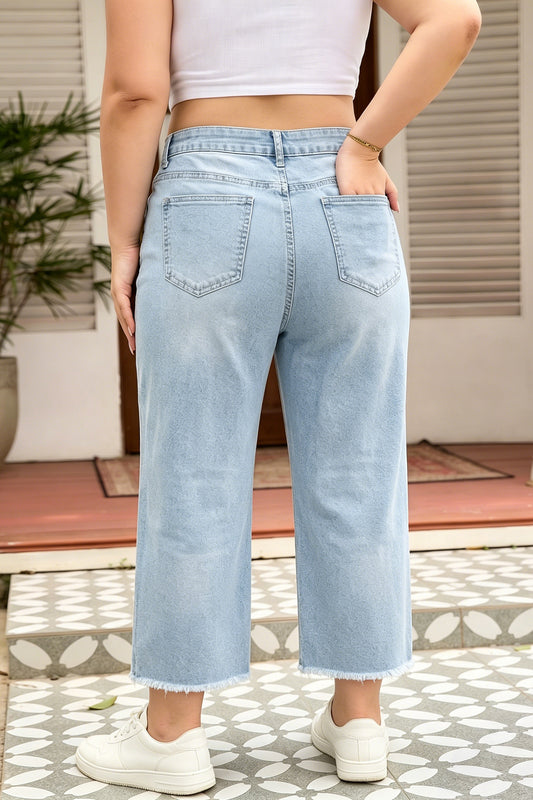
For many women, bottoms determine whether a work outfit feels comfortable or restrictive. That makes them a sensible foundation. Look for silhouettes you genuinely enjoy wearing among women's officewear bottoms, then build upward rather than trying to force yourself into a predetermined corporate uniform.
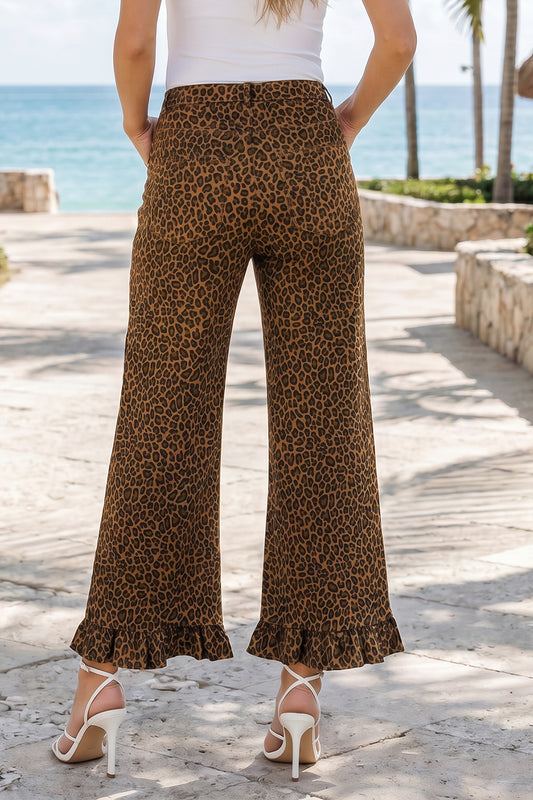
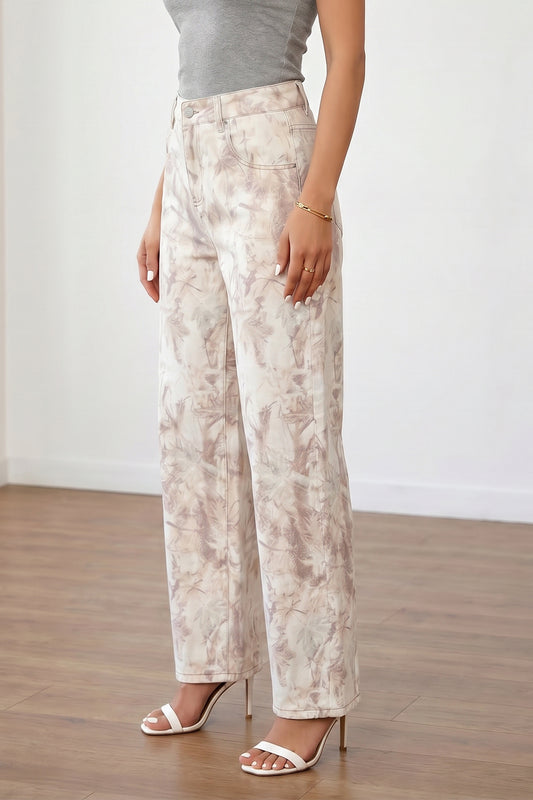
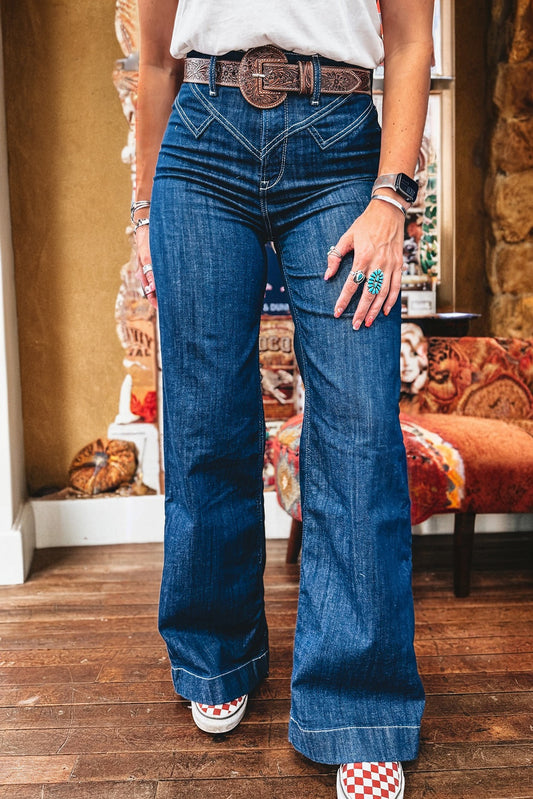
Wide-leg trousers are particularly useful because they can occupy several dress-code levels at once. Styled with a button-down shirt and structured blazer, they can feel polished and businesslike. With a lightweight knit or uncomplicated top, the same trousers can become relaxed professional style.
That versatility matters.
Your most useful wardrobe staples should be able to change character without requiring an entirely different outfit.
The "three tops" test
Before considering a new pair of work trousers part of your dependable wardrobe, mentally pair them with three tops you already own.
Can you wear them with:
- a simple fitted or relaxed top?
- a shirt or blouse?
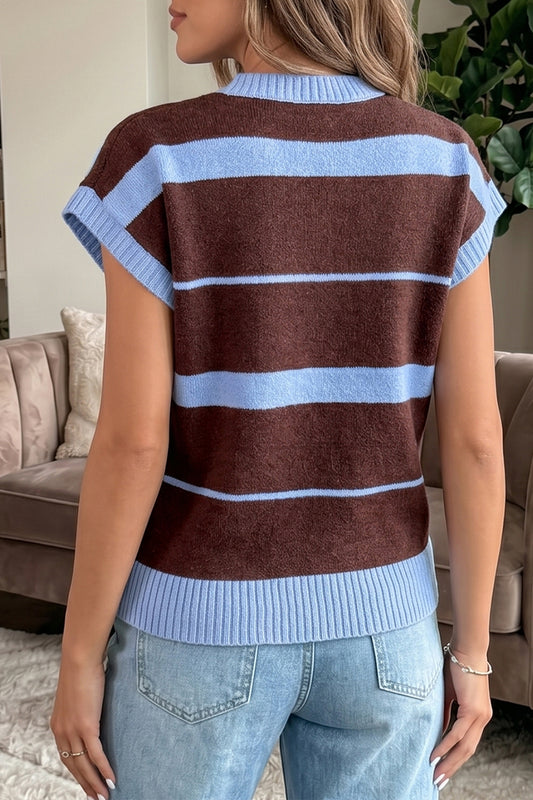
- a jumper, cardigan or lightweight knit?
If the answer is yes, they're doing useful work.
If they require that one particular blouse, with those particular shoes, but only when the blouse is tucked in correctly, they're probably creating decisions rather than removing them.
Your Top Shouldn't Be the Complicated Bit
Once you've found dependable bottoms, choosing the upper half becomes considerably less dramatic.
The strongest office tops for women are often the ones with range: pieces that can look relaxed on their own and more polished underneath a jacket.
That could mean:
- a crisp white shirt or button-down;
- a simple cream or black top;
- a fine knit;
- a comfortable blouse;
- a fitted top that layers easily;
- or an elevated basic that looks intentional without demanding complicated styling.
Notice what's missing from that list: anything requiring a 12-minute YouTube tutorial to tuck it in properly.
If you're creating low-effort workwear, ease is a feature.
A neutral palette can make this even simpler. Black, cream, beige, oatmeal, white and other muted colours naturally create more easy-to-match combinations. That doesn't mean your work wardrobe has to look like the inside of a bowl of porridge. Colour and prints can absolutely belong in it.
The trick is to make your foundation cooperative.
If most of your everyday tops work with most of your everyday bottoms, you can add a bright jacket, interesting dress, jewellery or another statement piece without destroying the whole decision-free system.
The One-Piece Loophole: Let a Dress Do the Work
There are mornings when even "top plus trousers" feels like one decision too many.
Enter the dress.
A good work dress is essentially an outfit that has already been assembled for you. There is no waistband-to-top negotiation. No wondering whether two shades of black are different enough to look deliberate. No abandoned shirt hanging sadly from the wardrobe door.
You put it on.
That is the outfit.
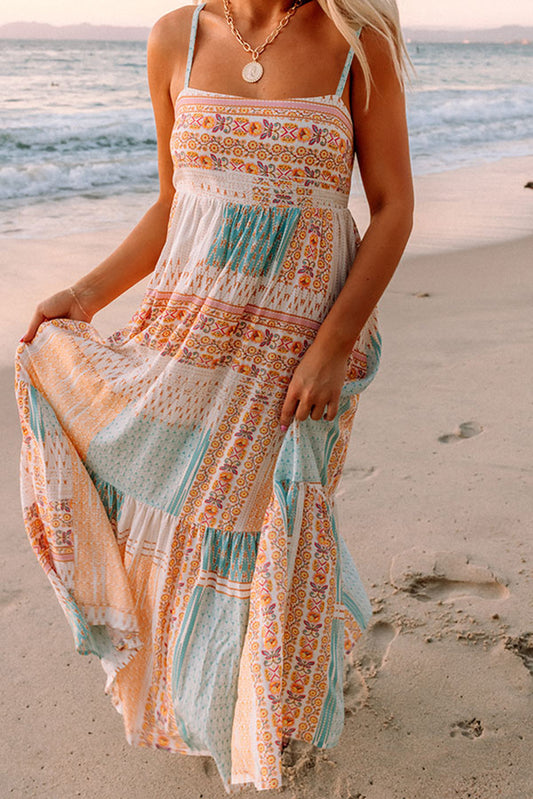
For anyone interested in easy getting dressed, office dresses deserve a disproportionate amount of space in the wardrobe.
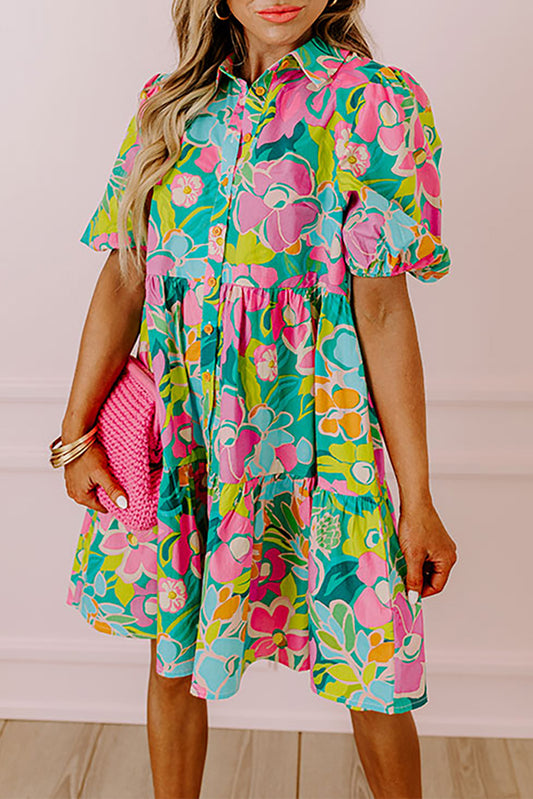
A midi dress, shirtdress or another work-appropriate dress can also solve one of the more annoying problems with professional outfits: changing levels of formality during the same day.
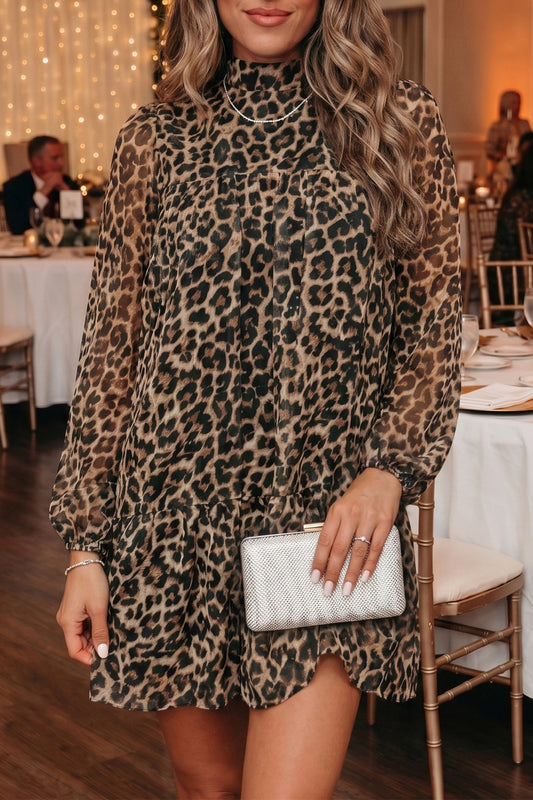
Worn simply, it can suit an ordinary day at your desk. Add a jacket, smarter shoes and understated jewellery and the same piece can move into a client meeting or an office-to-evening outfit without requiring a complete change.
One-piece dressing is the closest a work wardrobe gets to pressing an "easy" button.
That makes dresses particularly useful for hybrid work, early starts, travel days and mornings when your interest in fashion is hovering somewhere around zero.
Then Keep One "Make It Look Like I Tried" Layer
Every minimalist work wardrobe deserves one shortcut.
The polished layer is it.
You can be wearing the simplest combination imaginable, but add the right blazer or jacket and suddenly the outfit looks deliberate.
This is why office outerwear and layering pieces can earn their wardrobe space even if you aren't naturally drawn to tailoring.
You don't necessarily need an entire collection of blazers.
You need one or two layers you trust.
A structured blazer can sharpen wide-leg trousers and a tee. A softer jacket can make a dress feel more office appropriate. A cardigan or relaxed layer may be enough for a casual workplace where full tailoring would feel strangely formal.
This is the principle behind relaxed tailoring: retaining enough structure to look put together without feeling as though you're wearing a costume.
And if your workplace moves between smart casual, business casual and "apparently everyone decided trainers were fine today," that adaptable middle ground is extremely useful.
Build around the 80% day
One of the easiest mistakes when shopping for work is dressing for imaginary scenarios.
The important presentation.
The glamorous business lunch.
The theoretical promotion dinner.
The conference you attend once every eighteen months.
Instead, build most of your workwear wardrobe for the 80% day: the ordinary day you experience over and over again.
That's the commute. The desk. The meeting. The coffee run. The unexpectedly warm office. The unexpectedly freezing office. The quick errand on the way home.
Those are the days your wardrobe should be brilliant at.
Once you've solved those, dressing for everything else becomes much easier.
The Secret Is an Outfit Formula, Not an Outfit
Once you've found pieces you actually like wearing, the next step is to stop thinking in individual outfits.
Think in formulas.
An outfit is specific:
Black trousers + cream top + black blazer + loafers.
An office outfit formula is reusable:
comfortable bottom + simple top + optional layer + dependable shoes
Now the black trousers can become wide-leg trousers. The cream top can become a fine knit. The blazer can disappear on a warm day. Loafers can become ballet flats or clean work sneakers.
The structure remains.
This is what makes repeatable work outfits so useful. You aren't copying yesterday's clothes; you're copying yesterday's logic.
And logic is much easier to deal with before 8 a.m.
Five work outfit formulas worth stealing
If you want a capsule office uniform rather than a wardrobe full of isolated ideas, start here:
-
Tailored trousers + simple top + blazer + loafers
The dependable business-casual formula. Smart enough for meetings without automatically feeling corporate. -
Wide-leg trousers + lightweight knit + flats
Softer and more relaxed, but still polished enough for most everyday office environments. -
Midi dress + jacket + ankle boots
Particularly useful when you want a complete outfit with almost no coordination required. -
Straight-leg jeans + button-up shirt + blazer + clean sneakers
A strong casual-Friday or relaxed-office combination, assuming denim fits your office dress code. -
Skirt + simple knit + flats or block heels
An easy alternative when trousers have started to feel like your unofficial uniform.
None of these formulas needs to remain exactly as written. That's the point.
Swap the pieces. Adjust the shoes. Remove a layer. Add jewellery. Introduce colour.
The framework does the boring work so you can decide how much—or how little—you want to style it.
Repeat Your Clothes. Seriously.
There is a strange pressure around women's work style to make every appearance look new.
Ignore it.
If you wore an excellent combination last Wednesday, there is no reason you can't wear it again next Wednesday.
Or Monday.
Or tomorrow, with a different top.
Your colleagues probably don't maintain a forensic archive of your trousers.
A personal work uniform works precisely because it repeats. Think about people whose style always seems coherent. Often, they aren't inventing dramatically different looks every morning. They've simply worked out their silhouettes, colours and wardrobe foundations and keep returning to them.
That might mean you repeatedly wear:
- wide-leg trousers with fitted tops;
- midi dresses with simple layers;
- straight-leg trousers with knitwear;
- monochrome outfits with one interesting accessory;
- or relaxed tailoring with comfortable shoes.
Repetition creates consistency.
Consistency creates speed.
And speed is the entire point when your ideal morning contains almost no outfit decision-making whatsoever.
The 3-2-2 rule for a tiny workwear capsule
If your wardrobe currently feels chaotic, try reducing the problem.
For one working week, choose:
3 bottoms or dresses
2 everyday tops
2 layering options
Then rotate them.
You aren't committing to a minimalist wardrobe for the rest of your natural life. You're running an experiment.
Notice which combinations you reach for first.
Which outfit makes you feel comfortable?
Which one survives sitting, commuting and meetings?
Which item always seems to require ironing at exactly the wrong moment?
Which piece makes you think, yes, that'll do—in the best possible way?
Those observations tell you much more about your genuine work style than an aspirational mood board ever will.
Your best workwear essentials aren't necessarily the most impressive clothes you own. They're the pieces that repeatedly make difficult mornings easier.
Comfortable Office Outfits Should Actually Be Comfortable
"Comfortable" has occasionally become fashion shorthand for slightly less uncomfortable.
That isn't particularly useful.
If you're building comfortable office outfits, consider what comfort actually means across an entire working day.
Can you sit comfortably?
Can you walk to the station?
Can you bend down without rearranging half the outfit?
Will you still want to be wearing it at 5 p.m.?
Does it cope with an office thermostat apparently controlled by someone living in a different climate?
Practical workwear earns its place through the mundane stuff.
Soft fabrics, forgiving silhouettes, breathable layers and trousers with room to move aren't concessions to style. They're what make clothes wearable.
And wearable workwear gets worn.
Comfortable doesn't mean careless
This is where comfortable but professional becomes a useful test.
The goal isn't to replace everything with loungewear. It's to look for clothes that give you the ease of casual dressing while retaining enough shape, proportion or detail to feel appropriate for work.
For example:
- relaxed trousers can still look polished when the cut is clean;
- a soft knit can look sophisticated with a midi skirt;
- a comfortable dress can become meeting-ready with a structured layer;
- sneakers can work in some offices when they're clean and intentionally styled;
- an oversized blazer can provide structure without the stiffness of traditional suiting.
The exact balance depends on your workplace.
A law firm and a creative studio are not going to interpret "relaxed office dress code" identically.
But the underlying question remains useful:
How little discomfort can I tolerate while still meeting the level of polish my workplace expects?
Aim for that.
Not for suffering elegantly.
Stop Dressing for an Imaginary Corporate Office
Office wear has changed.
More importantly, offices aren't all the same.
Some workplaces still expect traditional business attire. Others operate firmly in business casual territory. Plenty now have hybrid teams where the dress code can shift depending on whether you're sitting at your kitchen table, going into headquarters or meeting a client.
So don't build a workwear wardrobe for "the office."
Build one for your office.
That means paying attention to what people actually wear rather than what generic professional-style advice says they ought to wear.
If your workplace is relaxed, a perfectly useful everyday outfit might involve dark denim, a good top and smart flats.
If your environment leans more formal, tailored trousers, dresses and structured layers may do more of the heavy lifting.
If you're hybrid, versatility becomes especially valuable because you need clothes capable of moving between contexts without creating two completely separate wardrobes.
Think in dress-code levels
A simple way to organise this is to give your clothes three imaginary settings:
Level 1: Relaxed
Hybrid days, casual Fridays and informal office time. Think clean sneakers, uncomplicated knitwear, relaxed trousers and office-ready denim where appropriate.
Level 2: Everyday polished
The centre of the wardrobe. Tailored or wide-leg trousers, simple dresses, smart tops, loafers, flats and optional layering.
Level 3: Important-day polished
Client meetings, presentations, interviews or more formal workplace events. Bring in the structured blazer, smarter shoes, sharper tailoring or your most dependable work dress.
Ideally, the same pieces move between levels.
A midi dress shouldn't need to be imprisoned in Level 3. Change the shoes and layer and it may work perfectly well at Level 2.
Likewise, tailored trousers don't automatically mean corporate wear. Pair them with a relaxed knit and flats and they can feel considerably softer.
This is how a smaller workwear wardrobe starts doing the job of a much larger one.
Neutral Colours Are a Shortcut, Not a Rule
Black trousers. White shirt. Beige blazer.
At this point, you may reasonably be wondering whether decision-free dressing requires you to surrender every colour you enjoy and spend your working life dressed like an extremely tasteful waiting room.
No.
Neutral colours are useful because they reduce coordination problems. They're a tool, not a personality requirement.
Black, white, cream, beige, grey, navy, brown and oatmeal tend to cooperate easily. Building some wardrobe foundations in those colours can therefore make a capsule work wardrobe much easier to mix.
But once that foundation exists, colour becomes easier to use.
Try:
neutral trousers + colourful top
or:
simple dress + statement jacket
or:
monochrome base + brighter shoes or accessories
or:
neutral outfit + patterned scarf
You can also choose your own version of a neutral. If burgundy, olive or dusty blue appears constantly in your wardrobe and coordinates with almost everything else you own, it is effectively functioning as a neutral for you.
The important thing is not adhering to an approved palette.
It's making sure your clothes talk to each other.
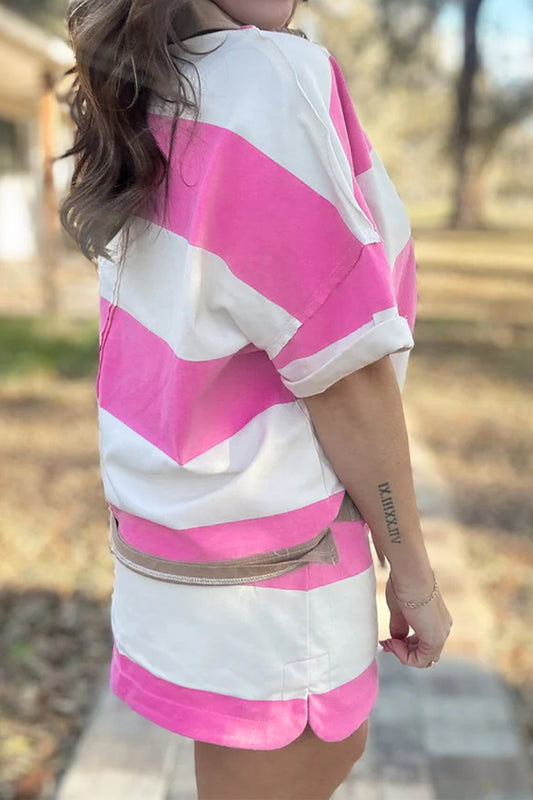
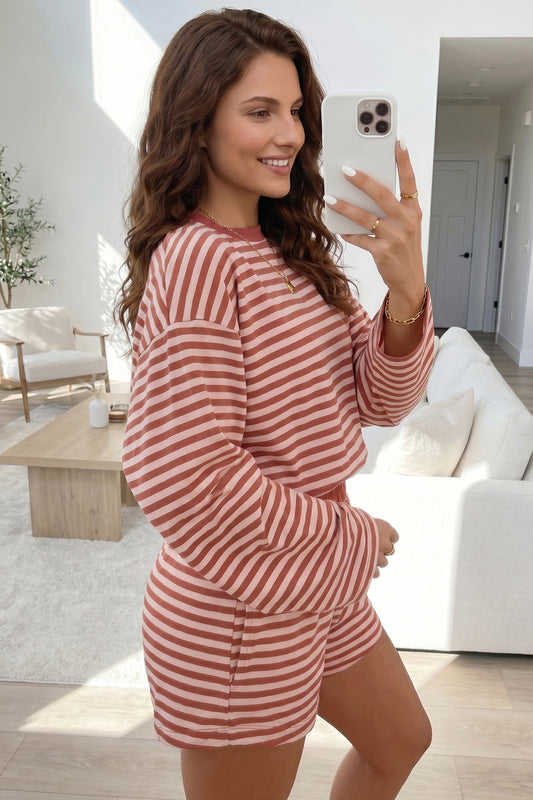
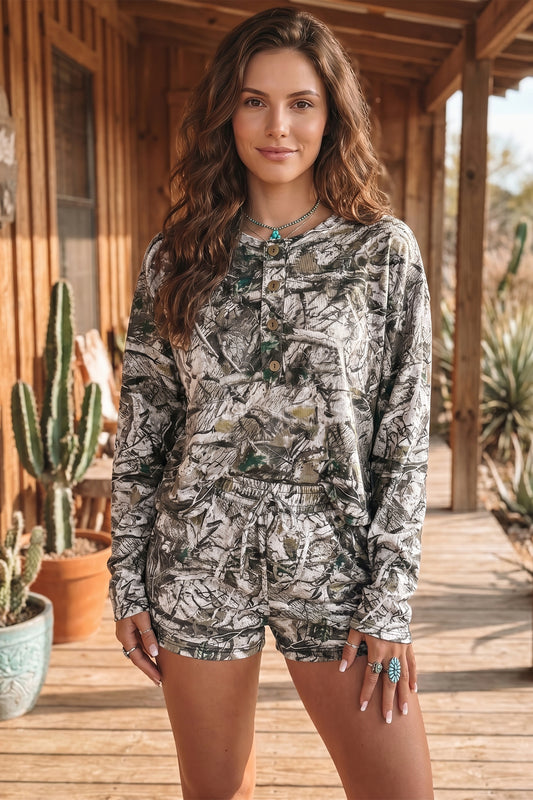
Matching Sets Are Basically a Legal Cheat Code
Matching sets deserve special mention because they sit somewhere between separates and one-piece dressing.
You get the visual ease of a complete outfit without losing the flexibility of individual pieces.
Wear the set together and you've got a ready-made look.
Then split it.
The top can work with trousers you already own. The bottom can work with a white shirt or fine knit. Add a jacket and you've created another version again.
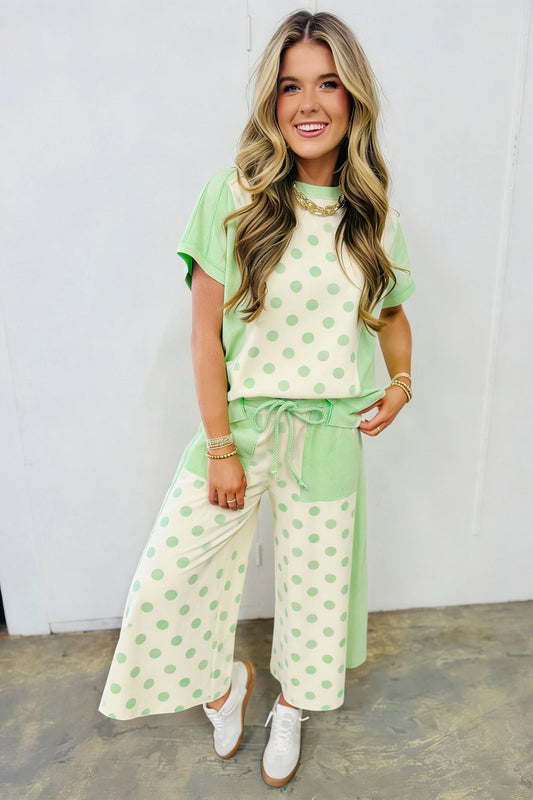
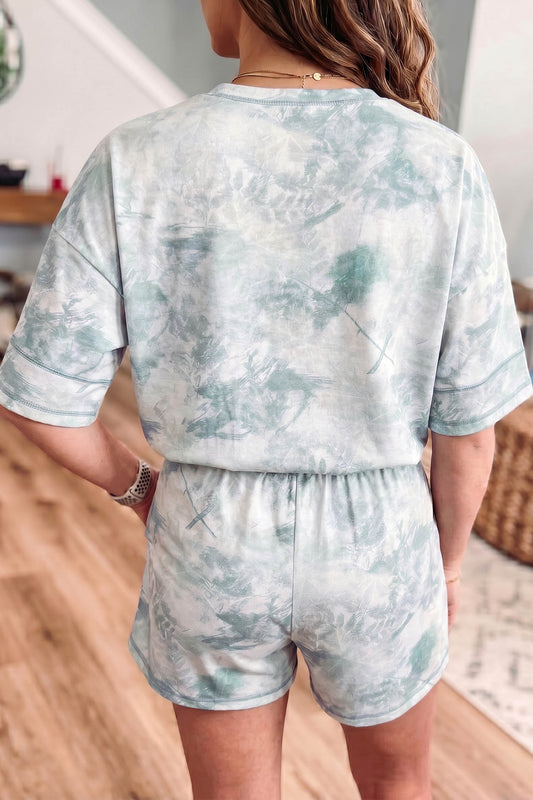
For women who hate spending time coordinating clothes, co-ords and two-piece sets solve an unusually large number of problems.
They look intentional because the coordination has already been done.
That makes them useful for everything from an ordinary desk day to an office-to-evening outfit, depending on the fabric, silhouette and styling.
It's essentially outsourcing the matching.
Shoes Can Ruin an Otherwise Brilliant Work Uniform
There is little point constructing the world's most efficient five-minute work outfit if the shoes make you regret leaving the house.
Your office shoes have three jobs:
- work with several outfits;
- suit your workplace;
- remain tolerable for the amount of walking and standing you actually do.
That third requirement is not optional.
For many work wardrobes, a small shoe rotation is enough. Loafers can add polish without the formality of heels. Ballet flats and pointed flats can work with trousers, skirts and dresses. Ankle boots are useful when the weather turns. Clean, minimal sneakers can be invaluable in workplaces where they're appropriate.
Block heels or kitten heels may earn a place if you genuinely enjoy wearing them.
The phrase if you genuinely enjoy wearing them is doing important work there.
Don't build a fantasy shoe wardrobe for the imaginary person who happily spends nine hours in shoes you personally want to remove after twenty minutes.
Use the commute test
Before declaring a pair of shoes an office staple, ask:
Would I willingly wear these if I had to walk twenty minutes to work?
Even if you normally drive, it's a useful test.
If the answer is an immediate no, decide whether those shoes genuinely deserve to be part of your everyday work uniform—or whether they're occasional shoes pretending to be essentials.
Your most reliable work outfits should survive real life.
That includes the journey to work, not merely the 30 seconds spent standing in front of the mirror before you leave.
The Best Office Outfit Might Be Slightly Boring
There. We said it.
Not ugly.
Not bland.
Not joyless.
Slightly boring.
In the sense that you know it works.
You know the trousers fit. You know the top goes with them. You know which layer to grab. You know the shoes won't destroy your feet. You know you look polished enough for whatever an ordinary Tuesday is likely to throw at you.
There is tremendous freedom in that kind of predictability.
Your wardrobe doesn't need to entertain you every morning.
Sometimes its highest purpose is simply to get you dressed, looking put together and out of the door without turning the first fifteen minutes of your day into an administrative task.
And once you've built that reliable foundation, the interesting question becomes not "What on earth am I going to wear?"
It's "How do I make this ridiculously easy wardrobe still feel like me?"
How to Make a Work Uniform Feel Like You
A personal work uniform should simplify your mornings, not erase your personality.
There is a difference between repeatable and identical.
Once the foundation of your wardrobe is doing its job—dependable trousers, easy dresses, uncomplicated tops, comfortable shoes and a useful layer—you can introduce personality in places that don't create another decision-making problem.
That might be:
- a silhouette you always feel good in;
- a favourite colour that appears throughout your wardrobe;
- gold or silver jewellery you rarely take off;
- an interesting belt;
- a printed scarf;
- a distinctive bag;
- a brighter knit;
- a particular style of shoe;
- or simply choosing relaxed, oversized shapes instead of traditionally fitted corporate ones.
The important part is consistency.
If you love oversized tailoring, make that part of your formula. If you're happiest in dresses, stop trying to convince yourself that every respectable work wardrobe requires seven pairs of trousers. If you feel most like yourself in monochrome outfits, lean into them.
Your personal work uniform should be personal.
Otherwise, you've merely exchanged one set of clothes you don't enjoy for a smaller set of clothes you don't enjoy.
Professional Without Looking Corporate
This is perhaps the sweet spot for women who dislike conventional office outfits.
You want to look as though you knew you were going to work when you got dressed.
You don't necessarily want to look as though you're about to announce a merger.
Fortunately, professional and corporate aren't synonyms.
Professional style can come from proportion, condition and coordination rather than formal business attire. Relaxed trousers can look professional. So can a midi dress, fine knit, smart flat or simple blouse.
Often, what makes an outfit feel polished is surprisingly subtle:
Fit. Clothes don't have to be fitted, but they should look intentionally proportioned.
Condition. A simple top in good condition generally looks smarter than an elaborate one that's tired, bobbled or permanently creased.
Shoes. They have an outsized effect on how formal the rest of an outfit appears.
Layering. A blazer, jacket or smart cardigan can move an outfit several steps up the office dress-code ladder.
Coordination. Clothes that look deliberately combined tend to read as more polished than individually formal pieces thrown together.
This is excellent news if you want office clothes that don't feel stuffy.
You can borrow the principles of traditional professional dressing without adopting the entire uniform.
Create a Wardrobe Where Almost Everything Knows Each Other
One of the best tests of a decision-free wardrobe is connectivity.
Imagine every item in your wardrobe attending the same slightly awkward networking event.
How many of them know each other?
If one blouse only speaks to one skirt and refuses to associate with anything else, it's not helping much.
Your most versatile pieces should have lots of friends.
A pair of tailored trousers might work with five tops, two jackets and three pairs of shoes. A simple dress might work with a blazer, cardigan, ankle boots, loafers and flats. A white shirt might pair with trousers, a midi skirt and office-ready denim.
Those are high-connectivity clothes.
They produce more outfits without requiring more possessions.
Try the three-outfit rule
Before adding something to your workwear wardrobe, think of at least three realistic outfits you could make with it using clothes you already own.
Not fantasy outfits involving four future purchases.
Actual outfits.
If you can't think of three, ask whether the item is special enough to justify being less versatile.
Sometimes it will be. A brilliant dress for important presentations doesn't need to perform twelve different jobs.
But everyday workwear essentials should generally earn their keep.
This is especially important when building a capsule work wardrobe because the aim isn't merely to own fewer clothes. It's to own fewer clothes with more useful combinations.
Your Sunday-Night Five-Minute Reset
You don't need to spend Sunday evening steaming fourteen outfits and arranging them by day unless that genuinely makes you happy.
A five-minute reset is enough.
Check the week ahead.
Do you have a client meeting?
A presentation?
A day working from home?
Dinner straight after work?
Then make sure your dependable pieces are clean and available.
That's it.
You can make the process even easier by choosing three likely outfit formulas in advance:
- ordinary office day: relaxed trousers + knit + flats;
- important meeting: tailored trousers + simple top + structured layer + loafers;
- busy desk-to-dinner day: easy work dress + jacket + comfortable shoes.
You're not assigning outfits to exact days. You're simply making sure Future You has options that require almost no thought.
This is stress-free dressing in its least glamorous and most useful form.
Build a Week, Not a Wardrobe
If you're starting from scratch, don't try to solve your entire professional wardrobe at once.
Solve Monday to Friday.
A practical five-day rotation might look something like this:
| Day | Easy outfit formula | Why it works |
|---|---|---|
| Monday | Tailored trousers + lightweight knit + loafers | Polished start to the week without feeling excessively formal |
| Tuesday | Midi dress + simple jacket + flats | One-piece dressing with an easy layer |
| Wednesday | Wide-leg trousers + simple top + cardigan | Comfortable for a long desk day |
| Thursday | Tailored trousers + button-up + ankle boots | Reuses a foundation piece without repeating the whole outfit |
| Friday | Dark denim + relaxed top + blazer + clean sneakers | Easy casual-Friday option where the dress code allows |
Notice that this doesn't require five bottoms, five tops, five jackets and five pairs of shoes.
Quite the opposite.
The same trousers return. The same shoes can return. The jacket can appear twice.
That's what a functional workwear wardrobe is supposed to do.
Once one working week is easy, expand only when you discover an actual gap.
Maybe you need another warm-weather option.
Maybe you're constantly wishing you had a second pair of comfortable trousers while the first is in the wash.
Maybe your wardrobe works beautifully until somebody puts a client meeting in the calendar.
Those are useful reasons to add clothes.
"I suppose I should own this because it's workwear" isn't.
What About Hybrid Work?
Hybrid work has made the traditional work wardrobe simultaneously easier and more confusing.
You may only be in the office two or three days a week. But those days can carry more meetings, lunches and face-to-face interaction precisely because everyone has come in.
So hybrid workwear benefits enormously from versatility.
Instead of creating separate wardrobes for home and office, look for crossover pieces.
A comfortable knit might work at home with relaxed bottoms and then in the office with tailored trousers. A soft cardigan can move between both settings. A simple top can sit underneath a blazer on an office day without feeling ridiculously formal during a video call the next morning.
The smartest hybrid work wardrobe has a sliding scale rather than a hard boundary.
Home → casual office → everyday polished → important meeting
The more pieces that can travel along that scale, the less clothing you need to manage.
The Desk-to-Dinner Problem Is Usually Overcomplicated
Another classic piece of fashion advice suggests transforming your entire personality at 5:30 p.m. using a pair of heels and a mysterious statement necklace.
You probably don't need to.
If you regularly go somewhere after work, simply make office-to-evening versatility one of the criteria for your everyday clothes.
A simple midi dress is an obvious candidate. So are wide-leg trousers with a good top, a matching set or a monochrome outfit that can change character with a jacket or accessories.
The easiest desk-to-dinner outfit is one that didn't look excessively corporate at the desk in the first place.
Remove the blazer.
Change your jewellery.
Swap your shoes if you actually want to carry another pair.
You're done.
No phone-box transformation required.
What Not to Buy for Your Office Wardrobe
Knowing what not to buy can be more valuable than another list of work wardrobe essentials.
Be suspicious of:
1. Clothes that only work with one other item
Unless they're spectacular enough to justify it, they're creating wardrobe admin.
2. "Professional" clothes you dislike wearing
If you repeatedly avoid something because it's stiff, itchy, awkward or simply doesn't feel like you, its theoretical usefulness is irrelevant.
3. Shoes for your imaginary lifestyle
If your actual day includes stairs, trains, pavements and standing, shop for that day.
4. Pieces requiring constant adjustment
A work outfit shouldn't become a full-time monitoring responsibility.
5. Duplicates of a fantasy self
One aspirational power suit you never wear is a lesson.
Four are a collection.
6. Anything purchased without considering your existing wardrobe
A beautiful item that matches nothing can become surprisingly expensive once you start buying additional clothes just to make it functional.
The aim is not deprivation.
It's intentional workwear.
Every new piece should either solve a problem, replace something that no longer works, or create genuinely useful new combinations.
When You Do Want Something New, Look for a Job Description
Before buying another office piece, give it a job.
Not:
"I need a new top."
Try:
"I need a comfortable top that works with my black and wide-leg trousers, can sit underneath my blazer and doesn't require special care."
That's a job description.
Or:
"I need an easy dress for warmer office days that also works for client lunches."
Or:
"I need comfortable office shoes that work with trousers and dresses and can handle my commute."
Specificity protects you from buying attractive solutions to problems you don't actually have.
It also turns shopping into gap-filling rather than collecting.
And for somebody trying to escape outfit decision fatigue, that's a much healthier relationship with the work wardrobe.
The Final Test: Can You Get Dressed Half-Asleep?
This may be the most useful test of all.
Imagine you've overslept.
You have ten minutes before you need to leave.
There is no time to experiment. No ironing. No trying on four combinations. No standing in front of the mirror wondering whether something is giving office.
Could you reach into your wardrobe and produce an acceptable outfit almost automatically?
If yes, you've built a system.
If no, look for the point where decisions multiply.
Are there too many bottoms that only work with specific tops?
Do you have plenty of clothes but no dependable layers?
Are your shoes limiting otherwise useful combinations?
Are you trying to maintain several completely different versions of professional style?
Fix the bottleneck rather than buying randomly.
The Office Outfit for Women Who Hate Office Outfits Is a System
There isn't one magical blazer.
There isn't a particular pair of trousers that suddenly makes getting dressed effortless.
And there certainly isn't a universal office uniform that works for every woman, workplace, climate and dress code.
The real solution is a wardrobe designed around fewer decisions and better combinations.
Start with what you genuinely enjoy wearing.
Choose comfortable bottoms, uncomplicated tops or one-piece dresses. Keep a dependable layer nearby for instant polish. Find shoes that suit both your office and your actual commute. Use neutral tones where they make coordination easier, then add colour and personality wherever you want them.
Most importantly, repeat what works.
Your ideal workwear wardrobe might eventually become so predictable that you stop thinking of it as "styling" at all.
That's not a failure of imagination.
That's the system working.
The best office outfit isn't the one that makes getting dressed more interesting. It's the one that lets you get dressed, feel like yourself and get on with your day.
So tomorrow morning, don't ask yourself how to create a brilliant new professional outfit.
Ask a much easier question:
Which one of my reliable formulas am I wearing today?
Then get dressed and go.
Frequently Asked Questions
1. How many work outfits does a woman actually need?
There is no fixed number, but you don't need a different outfit for every working day of the month. For a five-day office week, a small rotation of versatile pieces can create plenty of repeatable work outfits.
The important number isn't how many complete outfits you own; it's how many combinations your clothes can make. A few bottoms, several interchangeable tops, one or two layers, a dress and dependable shoes can produce a surprisingly flexible workwear wardrobe.
If you only commute to the office two or three days a week because of hybrid work, you may need even less.
2. How can I look professional at work without wearing a blazer?
A blazer is useful, but it isn't compulsory. You can create a polished office style through clean silhouettes, coordinated colours and well-chosen separates instead.
Try combinations such as:
- wide-leg trousers with a fine knit;
- a midi skirt with a simple blouse;
- a work dress with smart flats;
- tailored trousers with a crisp button-down shirt;
- or a coordinated matching set.
A cardigan, overshirt or other structured layer can also replace traditional tailoring. The objective is to look intentional and work appropriate—not to fulfil an imaginary blazer quota.
3. What should I wear to work in hot weather without looking too casual?
For warmer days, concentrate on breathable work clothes, lighter fabrics and less complicated layering.
A loose shirt with wide-leg trousers, a lightweight blouse with a midi skirt, or an easy work dress can all reduce the amount of fabric and structure you're dealing with while remaining professional.
Lighter neutral tones can also feel fresher than head-to-toe dark colours.
The key is to simplify the outfit rather than automatically make it more casual. A clean silhouette, appropriate hemline and polished shoes can do much of the work that a jacket normally does.
4. What can I wear to the office in winter without ruining my outfit with layers?
Treat winter layers as part of the outfit rather than emergency equipment added afterwards.
Fine knitwear is particularly useful because it provides warmth without excessive bulk. A fitted knit can replace a blouse, while a cardigan can become an intentional top layer. Dresses can work with boots and tights, and relaxed trousers leave room for warmer fabrics without sacrificing polish.
It also helps to distinguish between your commuting layer and your office layer. Your heavy coat needs to survive the weather; it doesn't necessarily need to remain part of the outfit once you're sitting at your desk.
5. Can leggings ever be appropriate for the office?
Sometimes, but this depends heavily on the workplace and how they're styled.
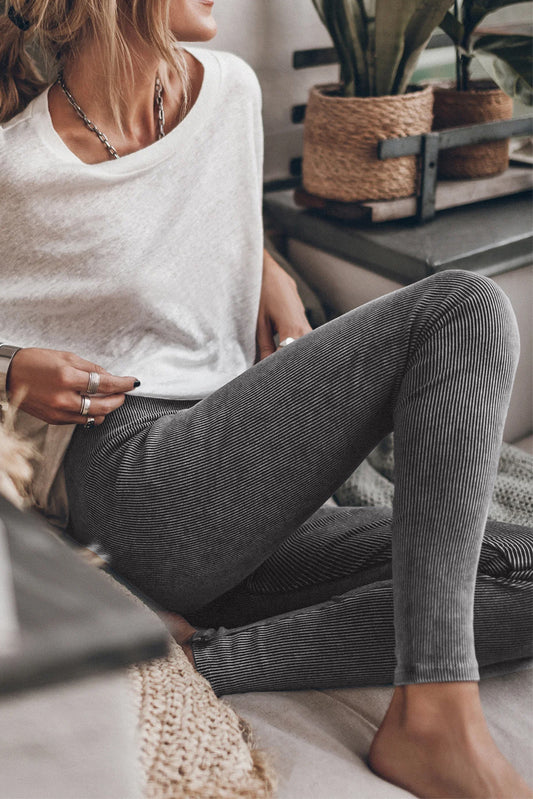
In a relaxed or creative office, substantial, non-sheer leggings may work with a longer structured top, knit or jacket and polished footwear. In a conservative professional environment, tailored trousers are generally the safer choice.
The useful distinction is between leggings styled as deliberate office clothes and leggings that look as though you're on your way to the gym.
When you're uncertain, follow what is actually considered acceptable in your workplace rather than relying on a universal business-casual rule.
6. How do I make cheap or simple work clothes look more expensive?
Start with coordination rather than price.
Simple clothing often looks more elevated when the fit is intentional, the fabric is well cared for, shoes are in good condition and the overall outfit isn't fighting for attention.
Tonal dressing can help too. Combining related neutral tones—cream with beige, black with charcoal, navy with blue—can make straightforward pieces look more considered.
Small details matter as well: tidy knitwear, properly cared-for shoes, simple jewellery and a structured bag can create effortless polish without requiring an expensive designer wardrobe.
You don't need every item to look expensive. You want the whole outfit to look intentional.
7. What should I keep at my desk for unexpected meetings or changes of plan?
A small office backup kit can rescue an otherwise casual day.
Depending on your workplace, useful items might include:
- a neutral cardigan or desk jacket;
- simple jewellery;
- a pair of smarter flats;
- tights or hosiery if you wear them;
- a basic clothing-care or stain-removal item.
The idea isn't to maintain a second wardrobe under your desk. It's to have one or two things that can quickly move a relaxed outfit towards professional attire when somebody unexpectedly announces that a client is arriving in twenty minutes.
8. How can I stop my office wardrobe from becoming boring?
Separate easy to repeat from boring.
Keep your wardrobe foundations dependable, then change the smaller details. Colour, jewellery, prints, texture, shoes and accessories can make familiar outfit formulas feel different without forcing you to rebuild the entire look.
For example, the same black trousers could be worn with a white shirt one day, a bright knit another and a tonal black top later in the week.
This gives you variety without sacrificing the reason your minimalist work wardrobe exists in the first place: easy getting dressed.
9. What should I wear on my first day at a new office when I don't know the dress code yet?
When you're uncertain, aim slightly more polished rather than dramatically formal.
A simple combination such as tailored trousers, an uncomplicated top, a smart layer and comfortable flats or loafers gives you room to adapt. A modest work dress can achieve the same thing.
Then observe what people around you actually wear.
Are sneakers common? Does anyone wear denim? Are managers in tailoring while everyone else dresses casually? Is the workplace genuinely business casual, or does the website simply say it is?
After a few days, you can adjust your everyday work outfits to the reality of the office rather than guessing from the outside.
10. How do I know when it's time to replace a workwear staple?
Frequency of wear matters more than age.
A dependable item has probably reached replacement territory when it has permanently lost its shape, the fabric is noticeably worn, stains or damage can't be reasonably repaired, the fit no longer feels right, or you regularly put it on and immediately take it off again.
Pay particular attention to your hardest-working wardrobe staples. If one pair of black trousers appears twice a week, naturally it will wear faster than a dress you use once a month.
And when something has genuinely worked brilliantly, you don't necessarily need to reinvent the wheel.
Sometimes the smartest addition to a decision-free wardrobe is simply a replacement for the thing you already know you love.